LANCELOT
(lɑːnsəlɒt, proper noun)
In legend, the most famous of King Arthur’s knights.
Today, a digital wealth management tool to help freelancers, contractors, gig economy workers, and anyone with volatile, unpredictable income consistently and safely save money for retirement.
Lancelot is an app concept developed during a company-wide design jam to address challenges facing the banking and wealth management industries.
I led the Chicago design team to victory, i.e. team dinner (we chose hot pot, it was epic). This work went on to be used in a number of project-winning pitch decks and RFPs.
Who and Why
The original design jam prompt was:
”What does retirement look like for the unbanked/underbanked and individuals outside of employer sponsored retirement plans?”
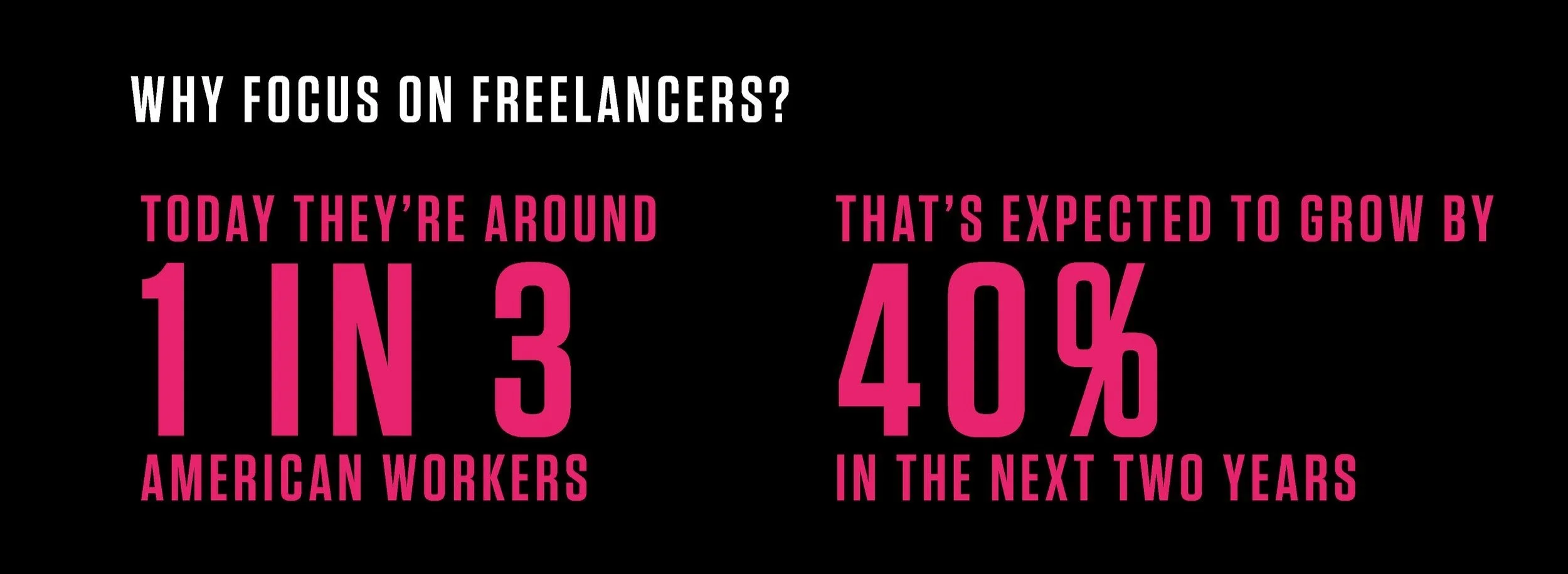
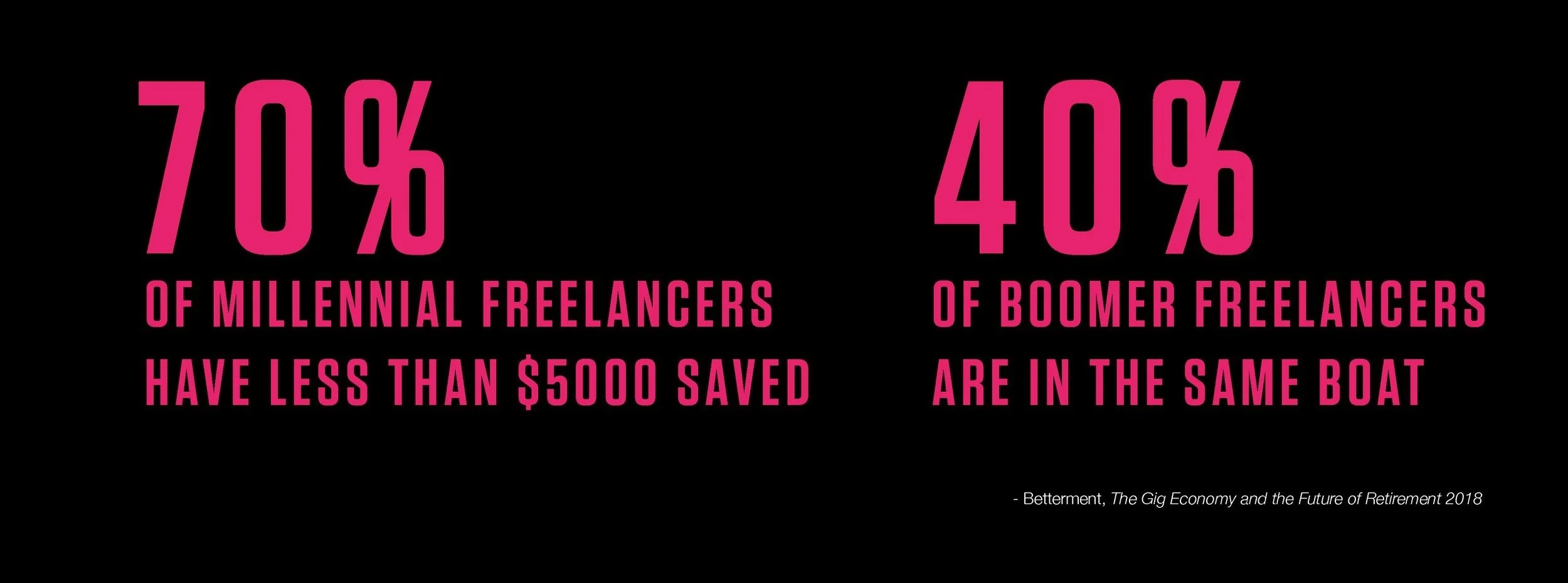
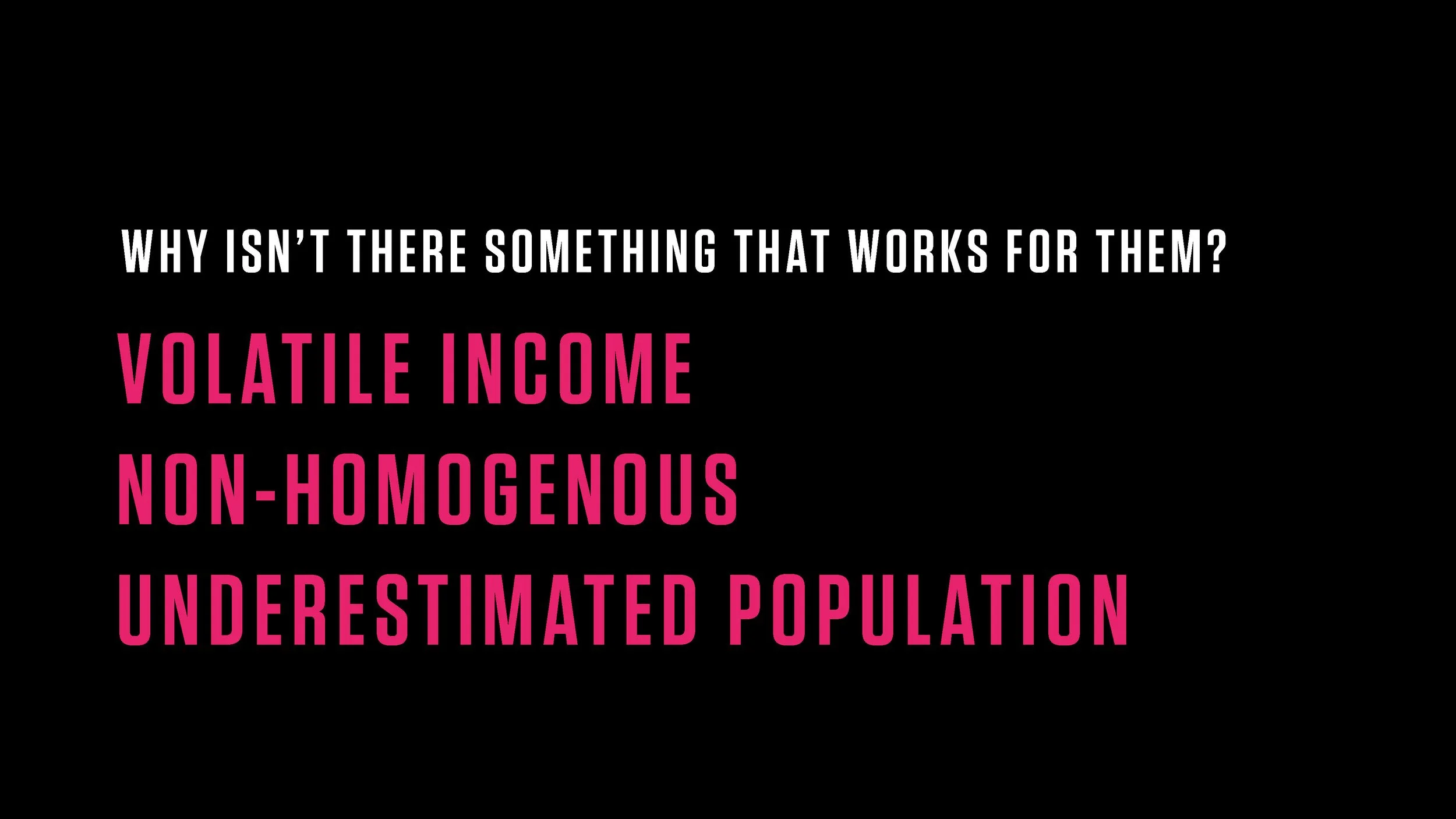
We chose to focus on freelancers not only because they’re an underserved and growing market, but because we all had personal connections to people who lived and worked in a diverse range of alternatives to the salaried 9-to-5.
Given the rapid timeline, it was important that we target a demographic we could quickly conduct robust primary research with.
Process
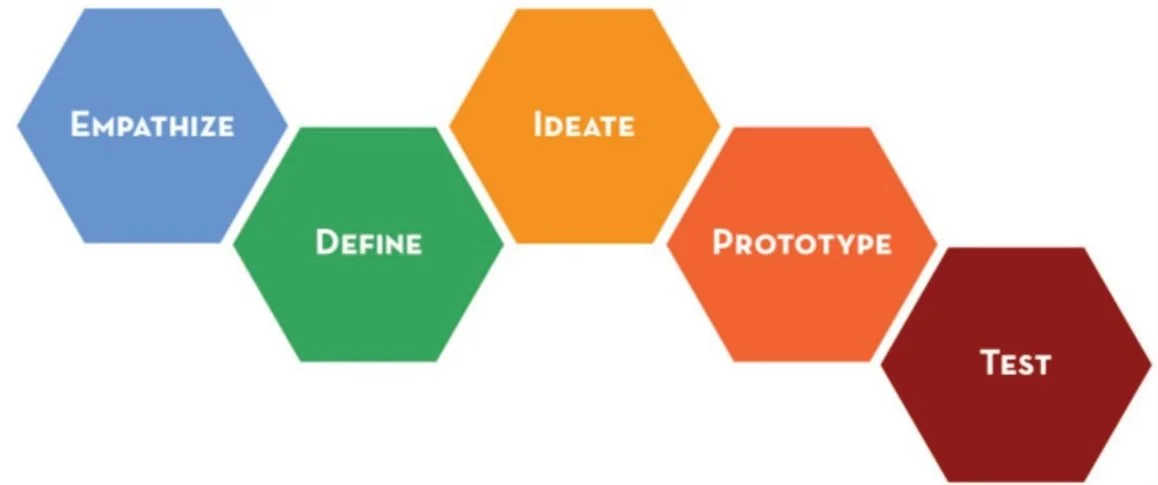
With relative freedom to determine our own approach, I chose to structure the project using a modified Google Design Sprint schedule, with daily tasks grounded in Stanford d.school’s human centered design process.
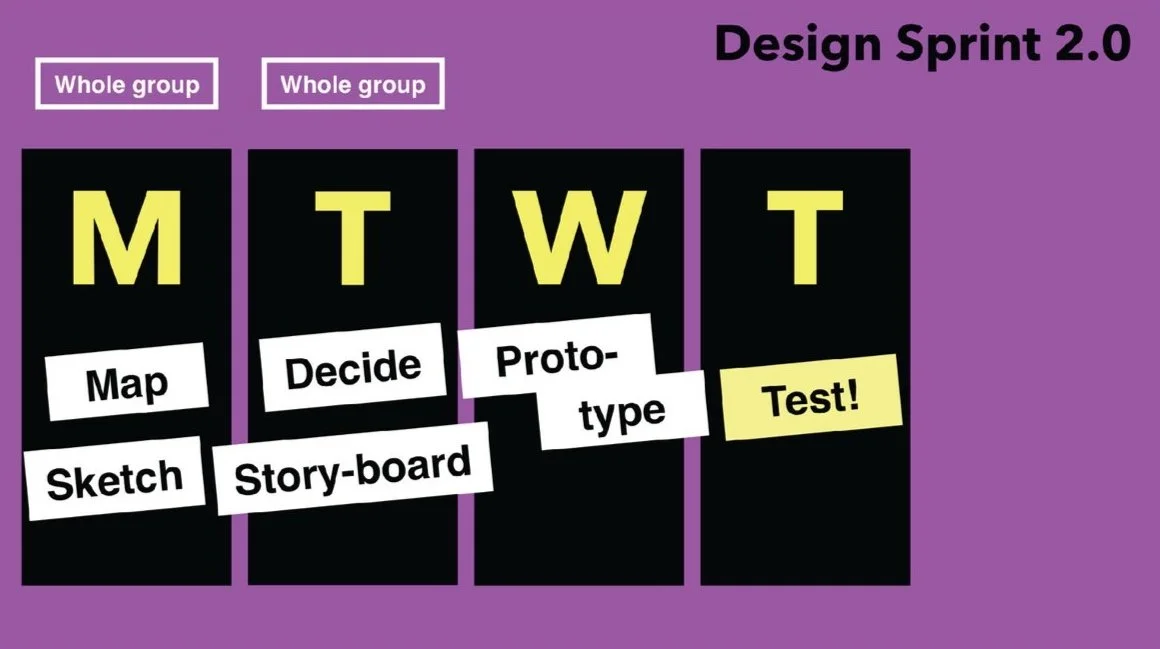
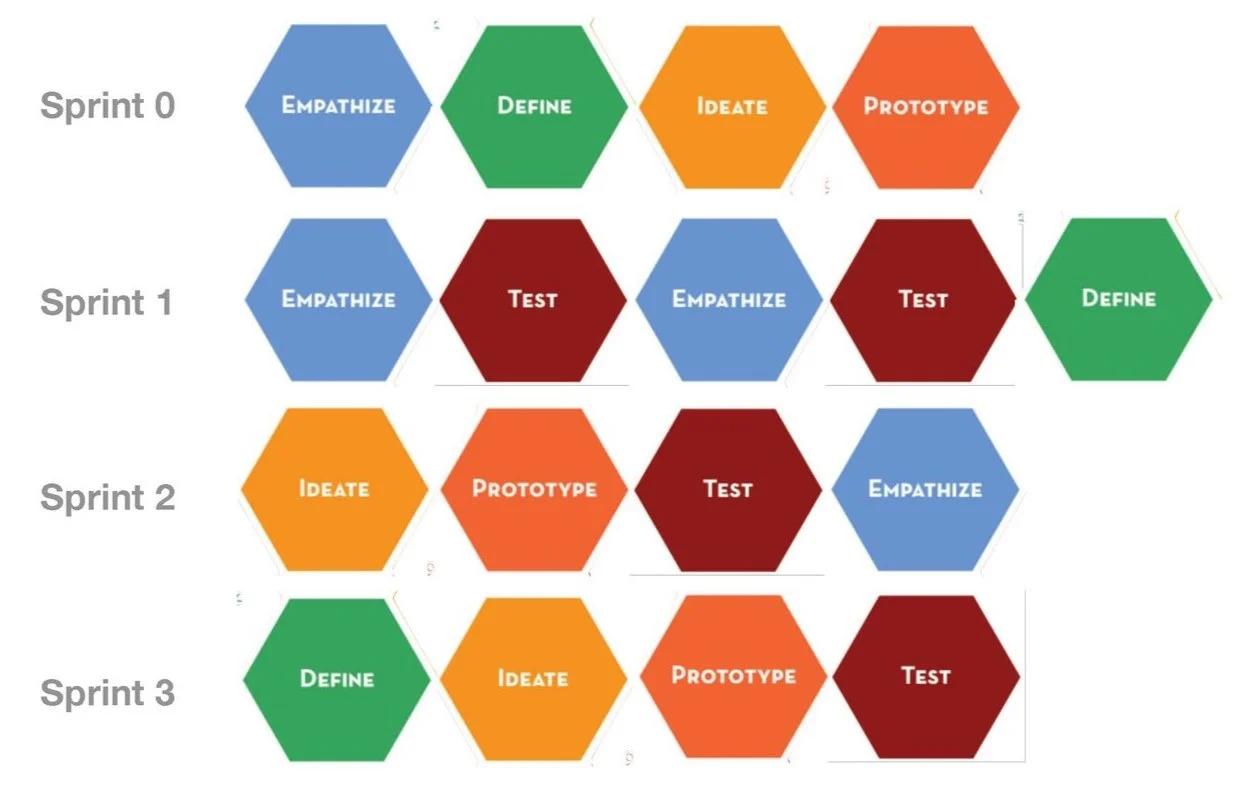
This is how it turned out for us.
Hypothesis
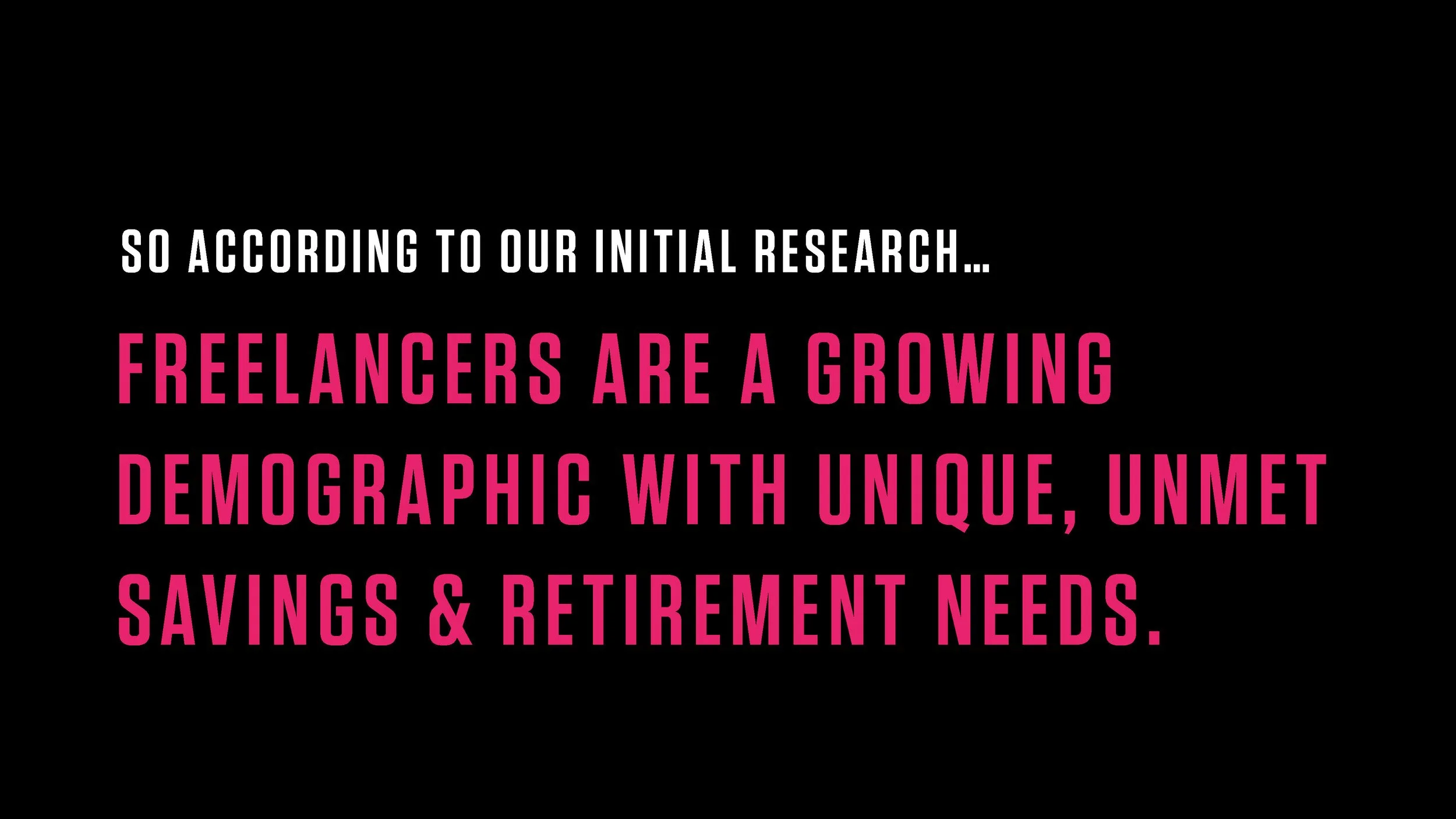
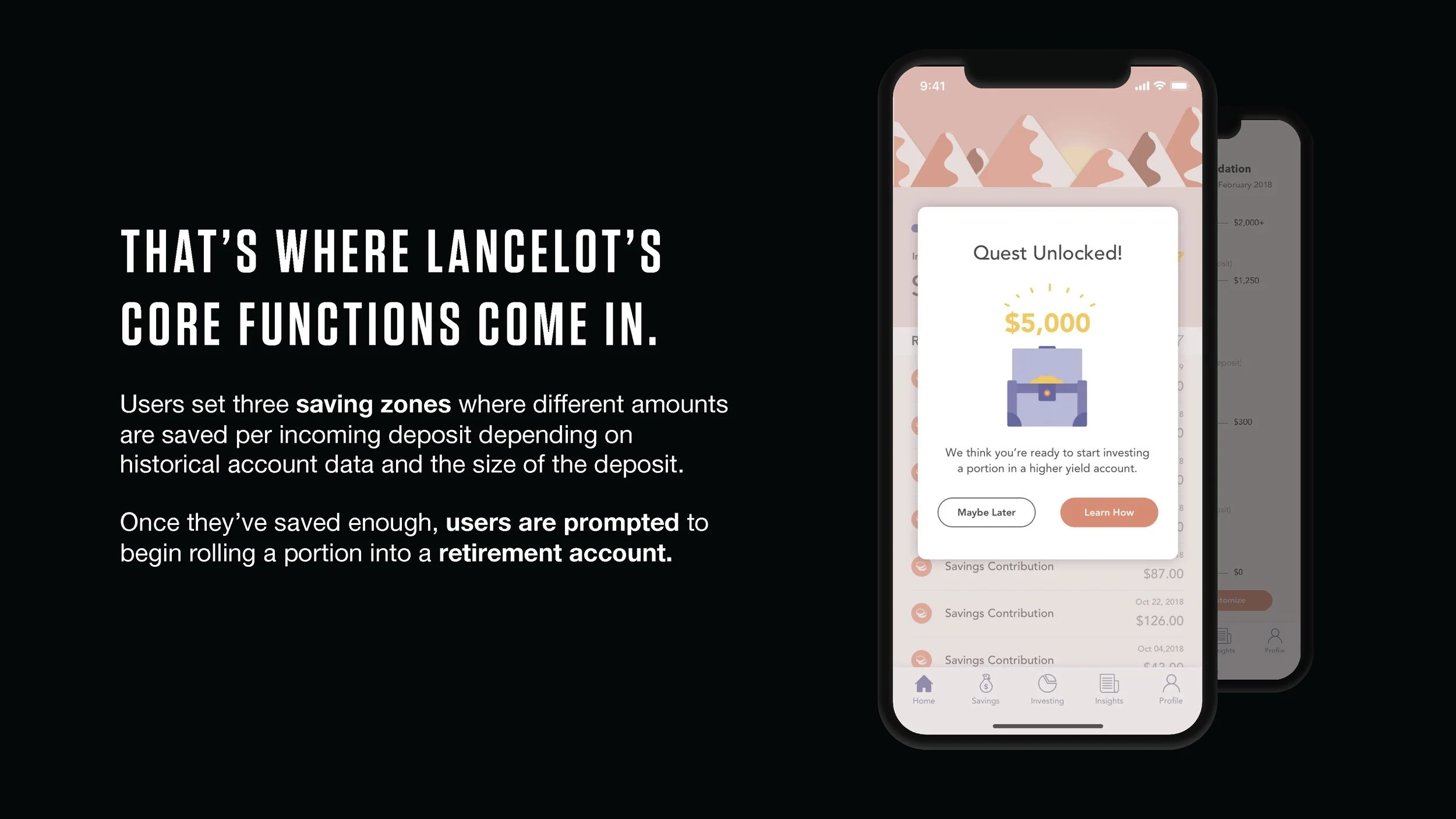
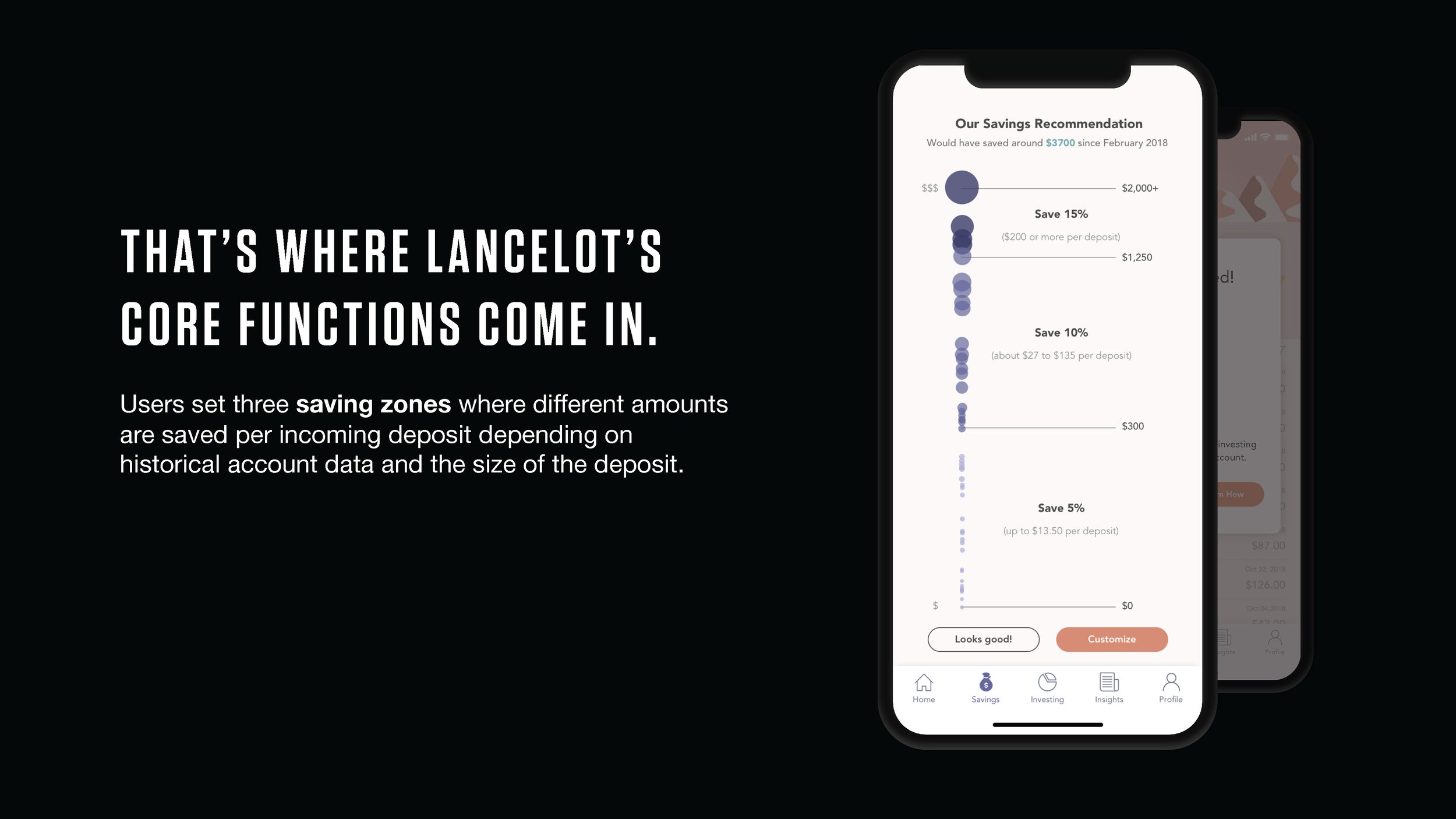
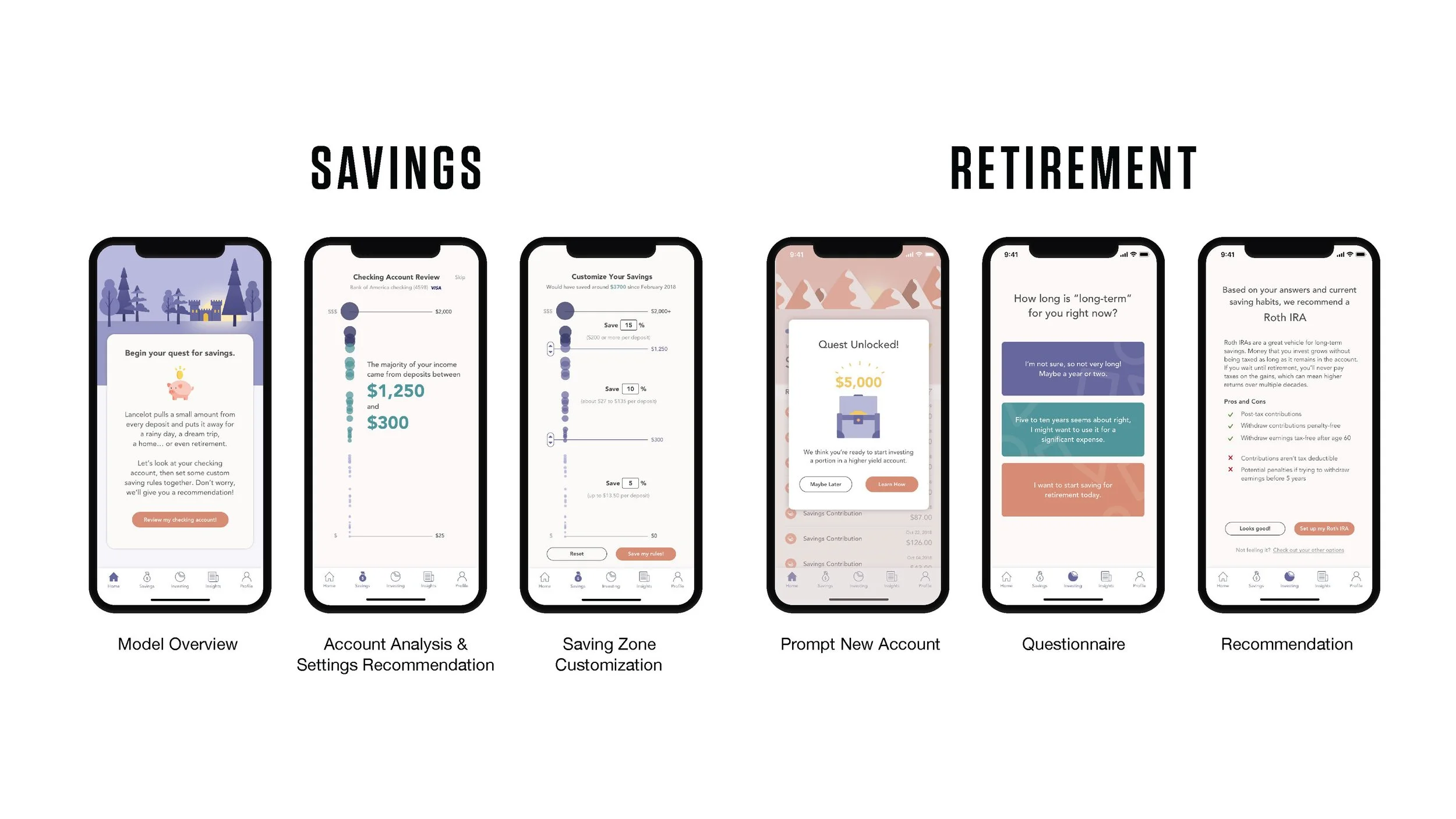
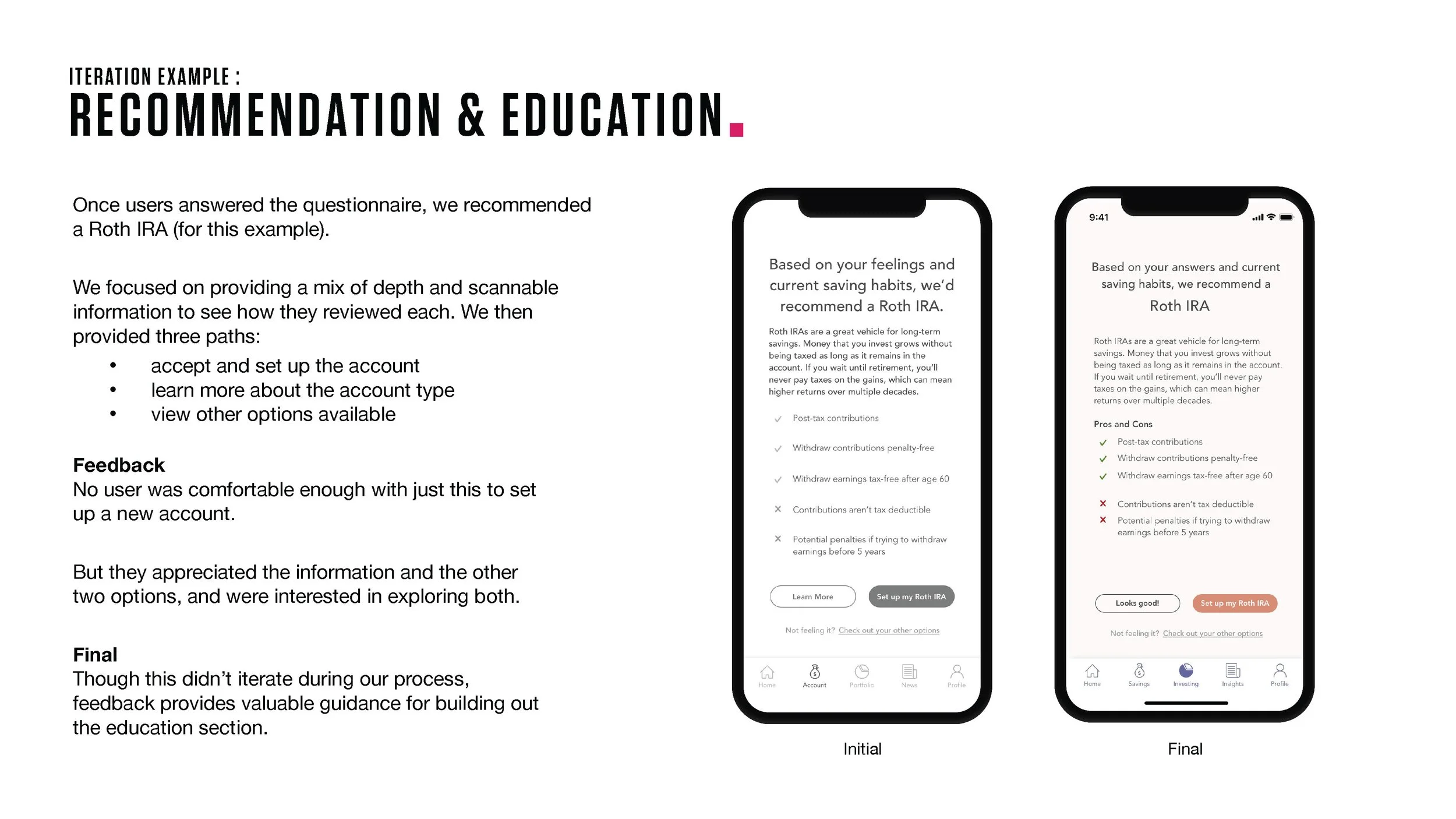
Based on our Sprint 0 research, we developed a pair of functionalities designed to work together at different stages of the user’s journey: customizable savings zones and retirement account guidance.
This was based on three hypotheses:
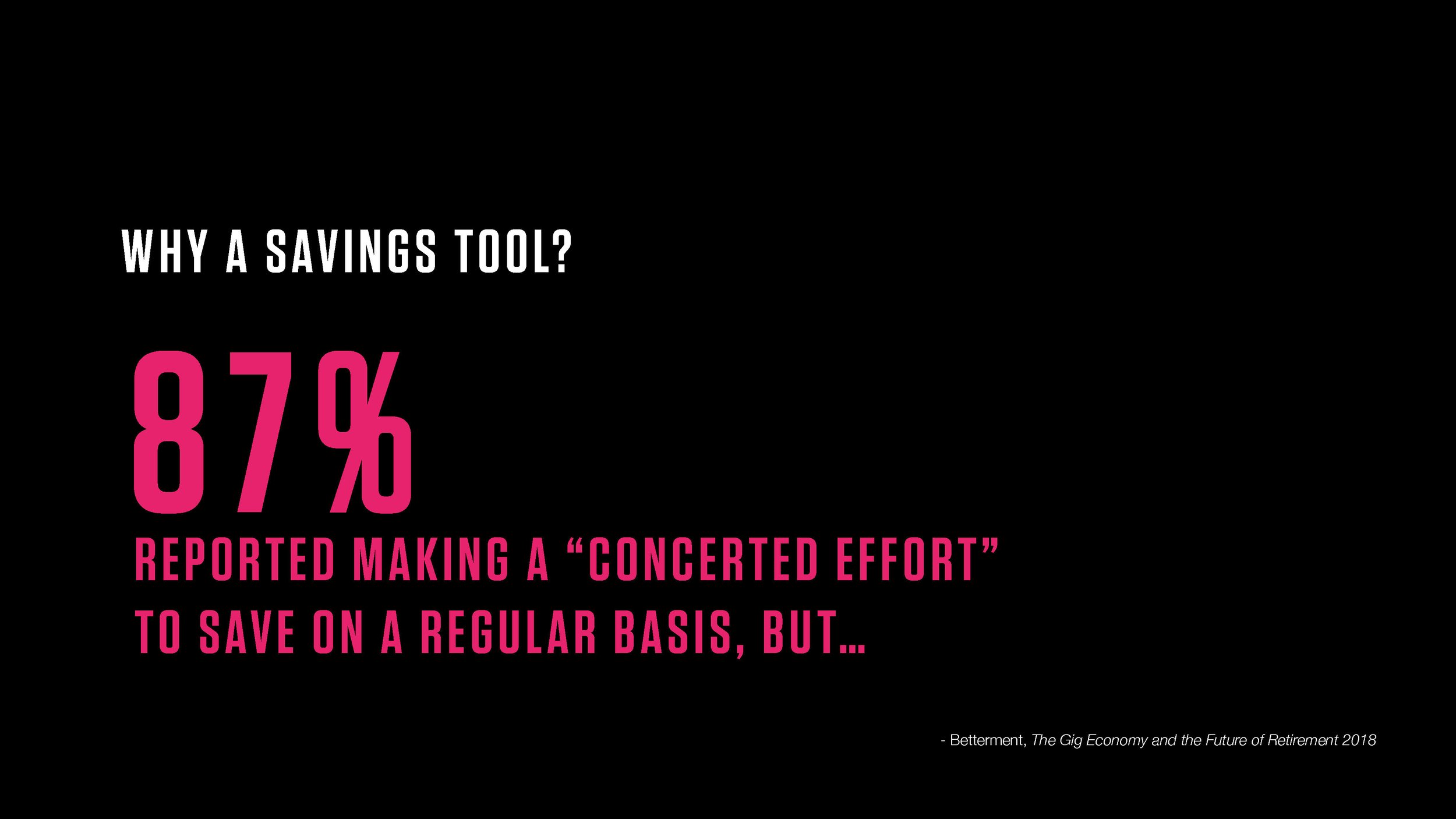
The most popular saving tools rely on a “set it and forget it” model. Ours needs to have a similarly low long-term mental load, while still being responsive to unpredictable income.
People who are inexperienced at saving money may feel unsure how much they can safely start with. We can use their account history to make recommendations.
People who experience volatile income may need to build confidence that they can save money safely. Putting saved money straight into a retirement account will likely feel too risky, so we’ll consider that a second phase.
Research & Iteration
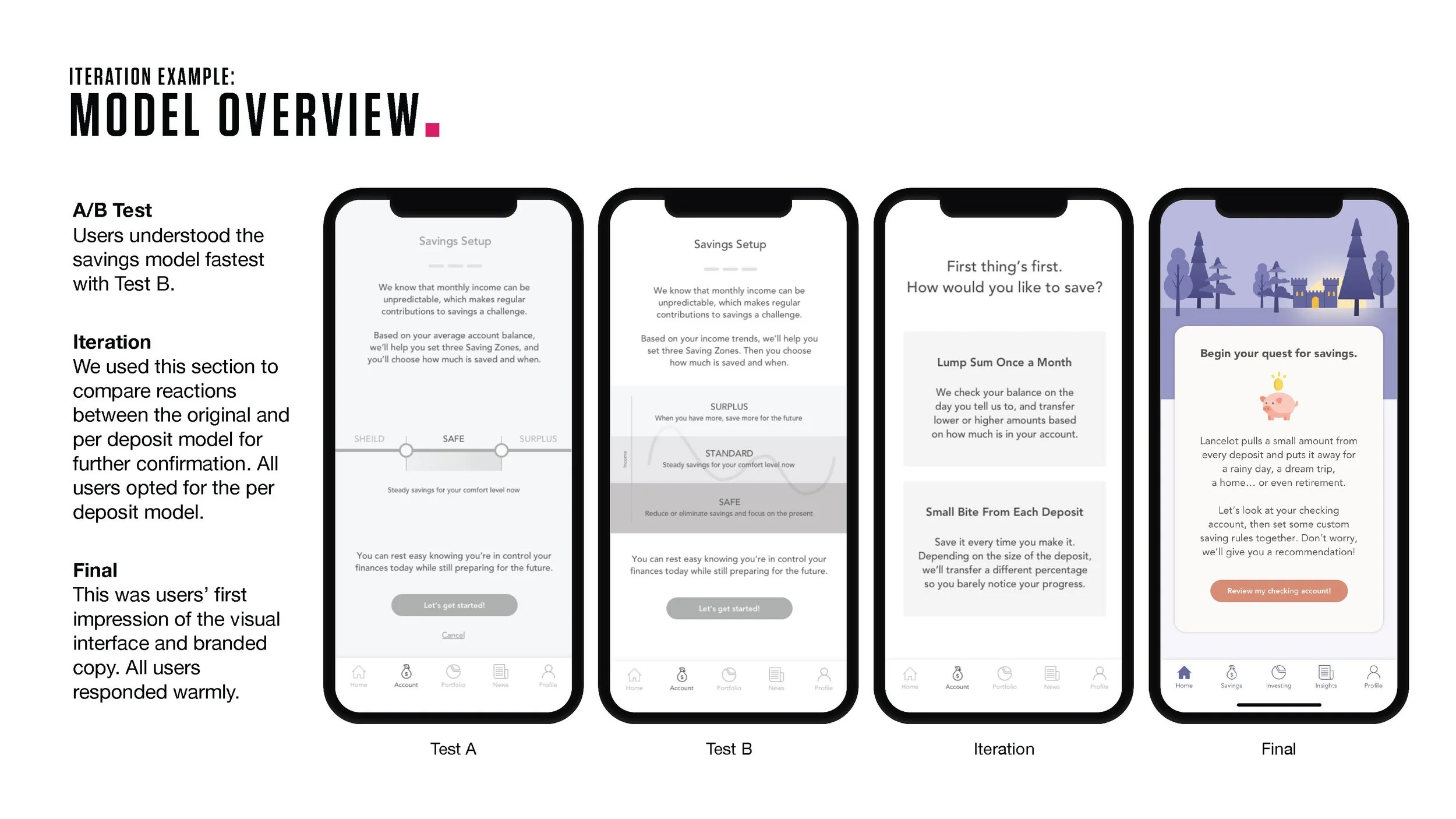
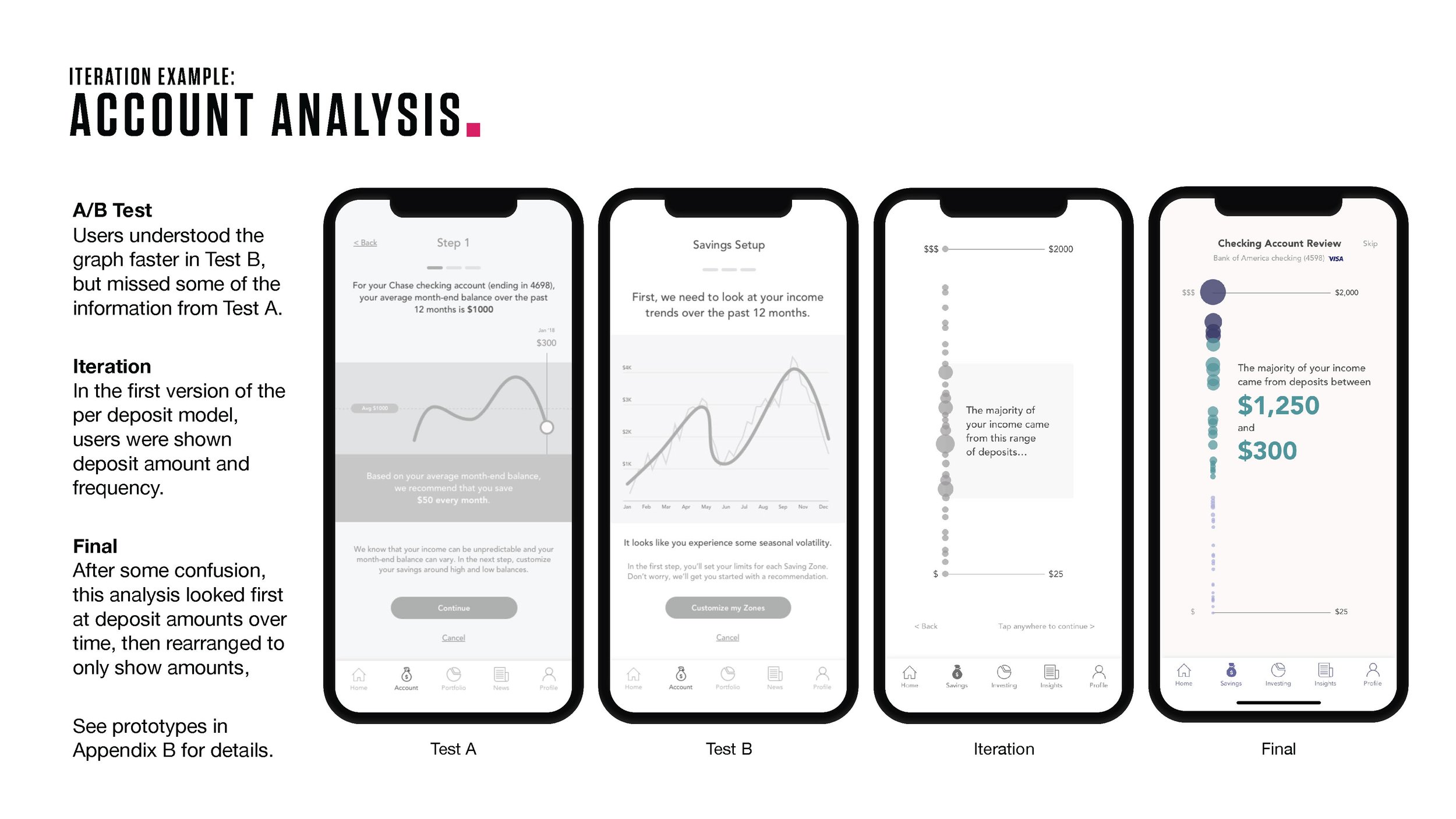
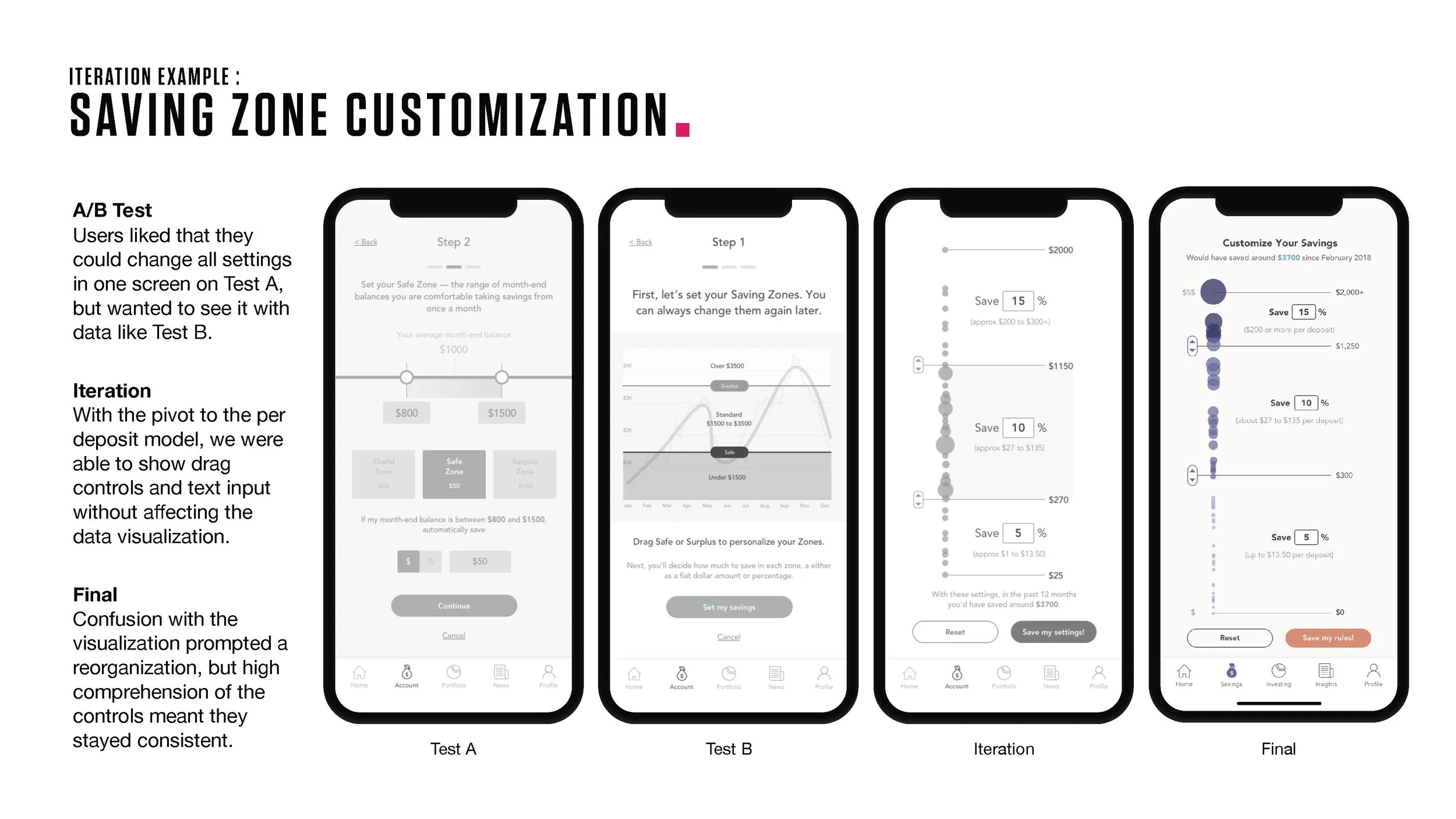
Despite robust third party information supporting our initial hypothesis, we decided to conduct our first round as a hybrid interview and A/B test to hear first-hand how volatile income affected our sample size and gather initial impressions on a few divergent approaches to the customizable saving zone interface.
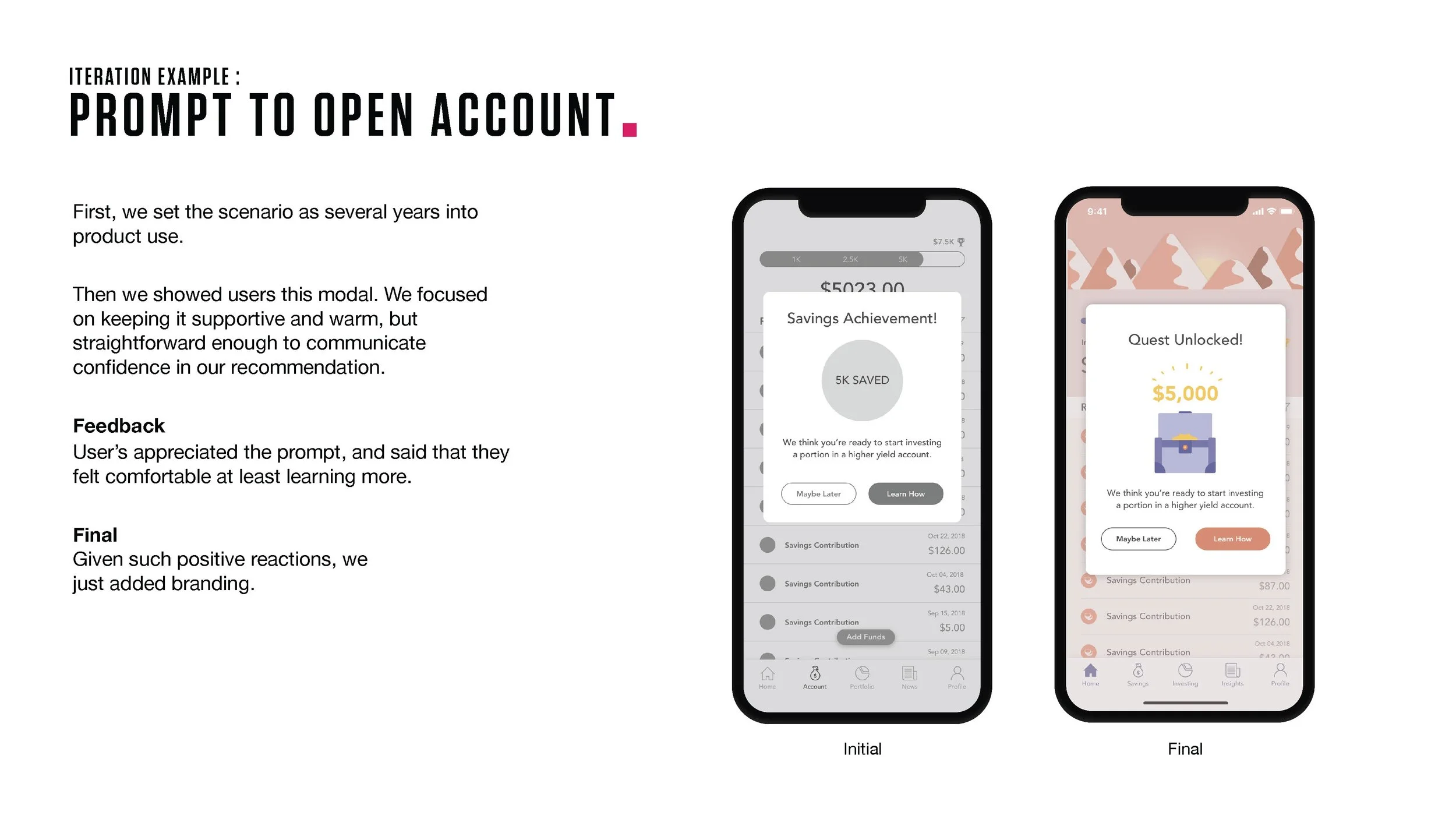
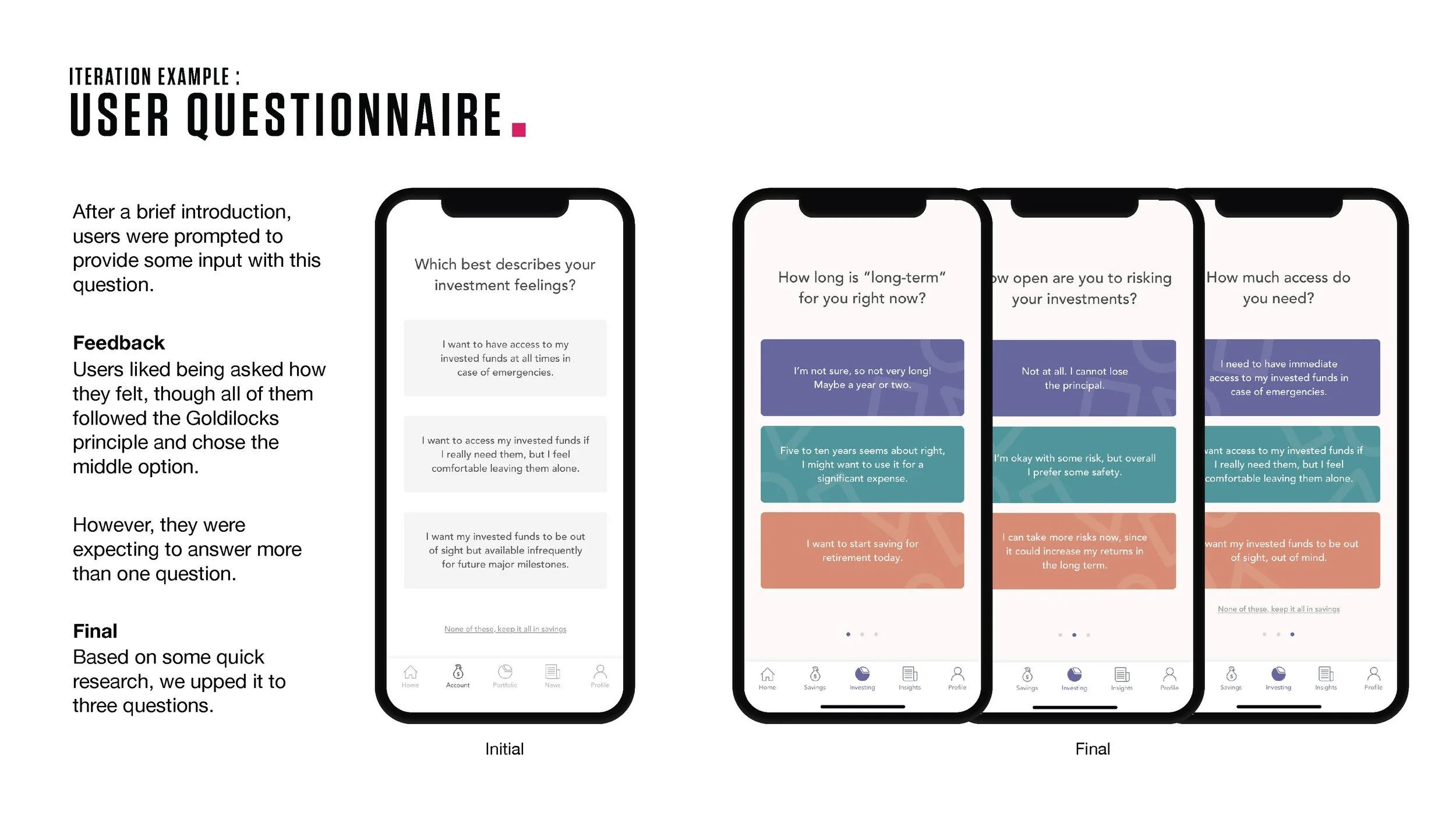
Our second round usability testing helped us smooth out and clarify the interaction model.
For the final round we gathered feedback on the full onboarding flow and subsequent step-up into retirement account recommendations.
Final Prototype
Outcomes
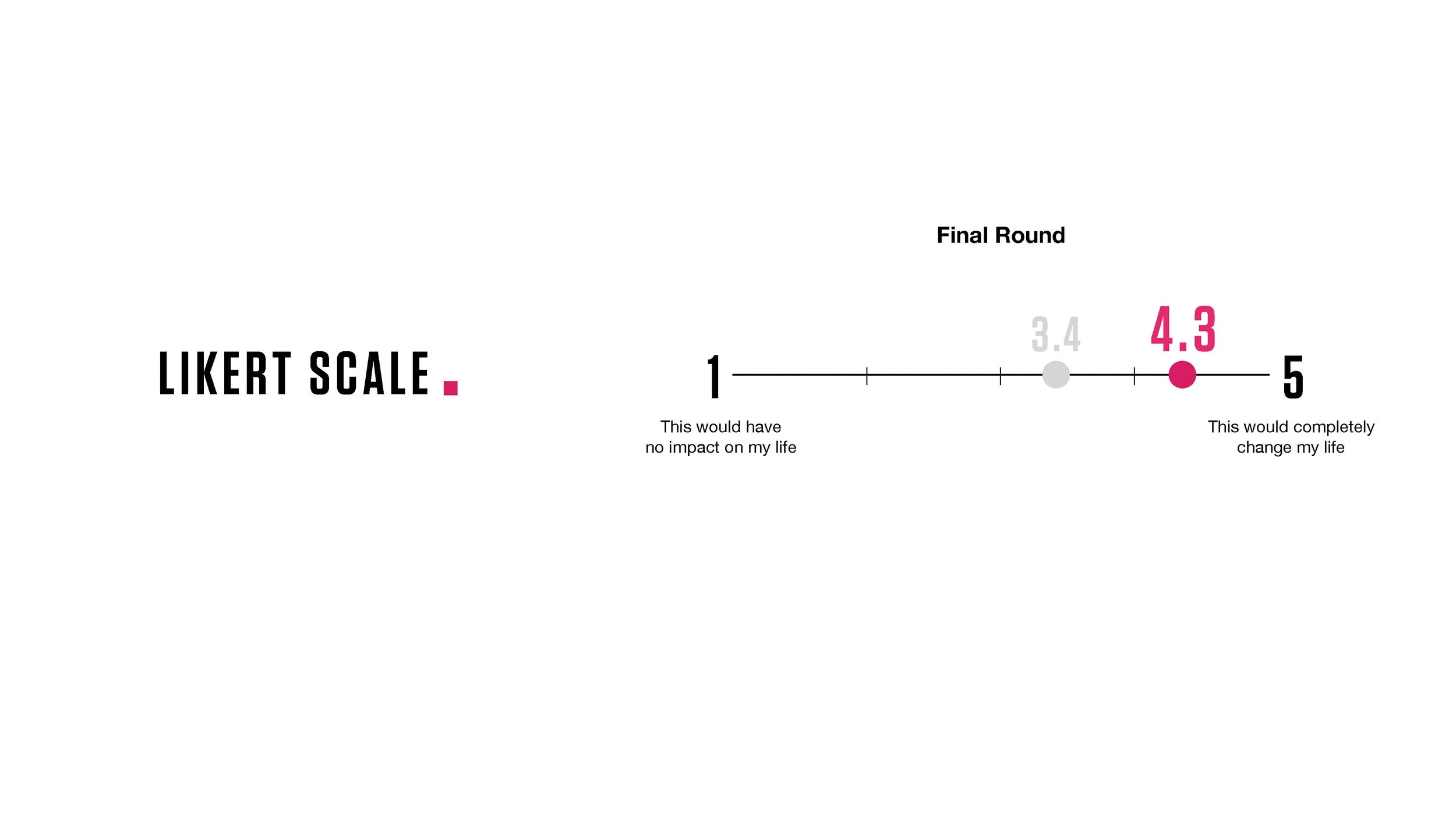
Our iteration from the initial A/B test through to the final round of feedback increased the concept’s Likert score by almost a full point.
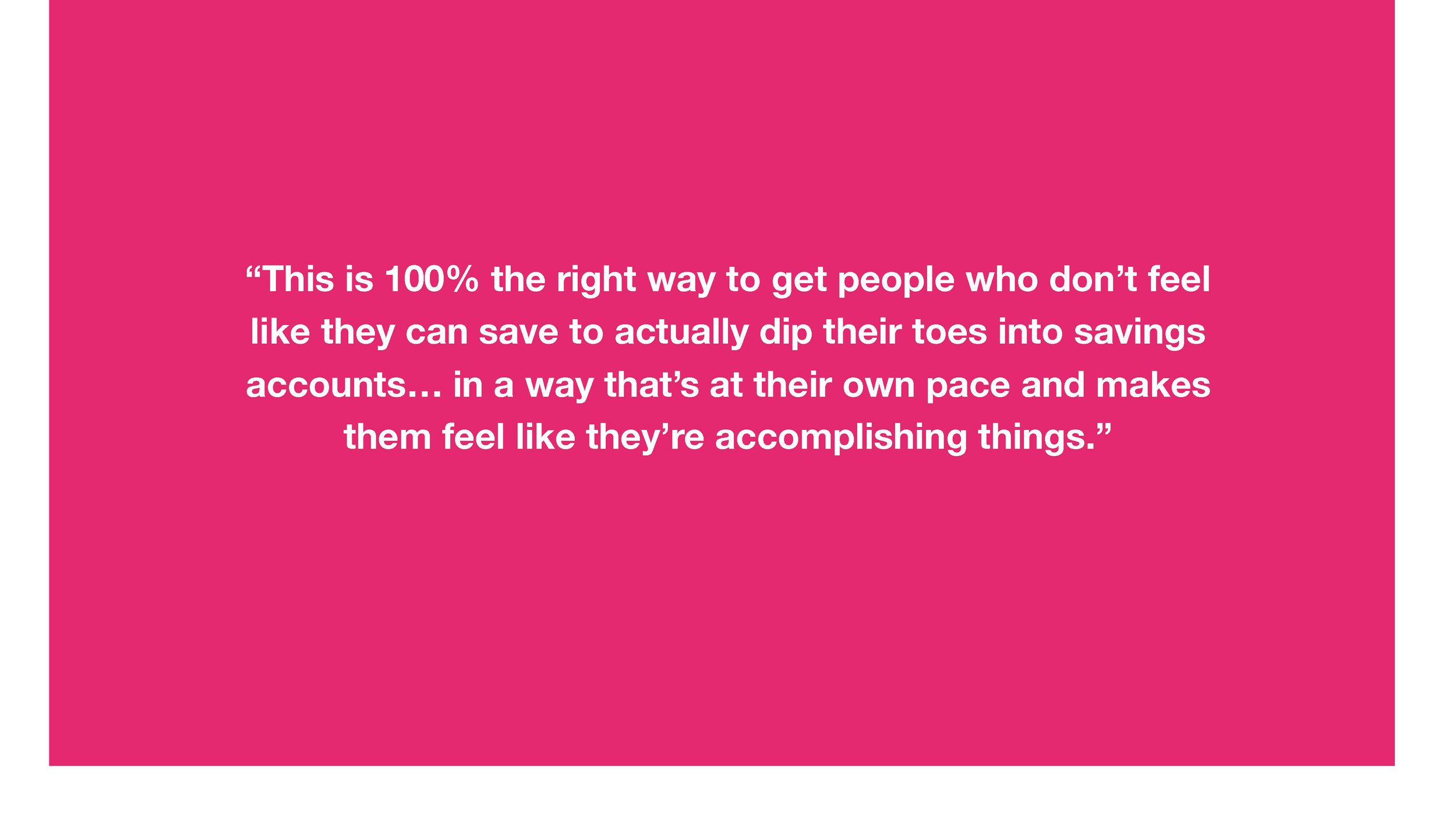
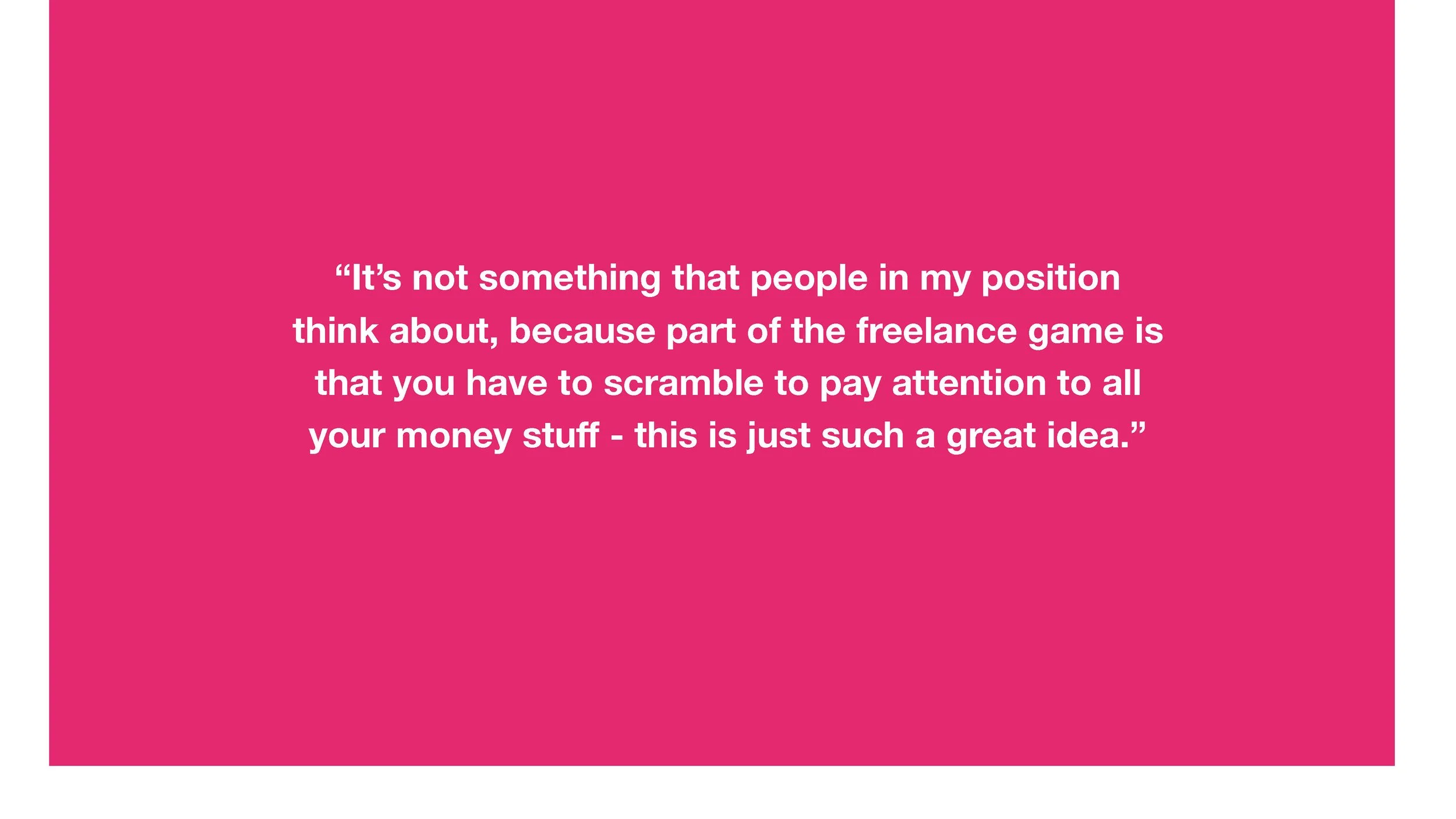
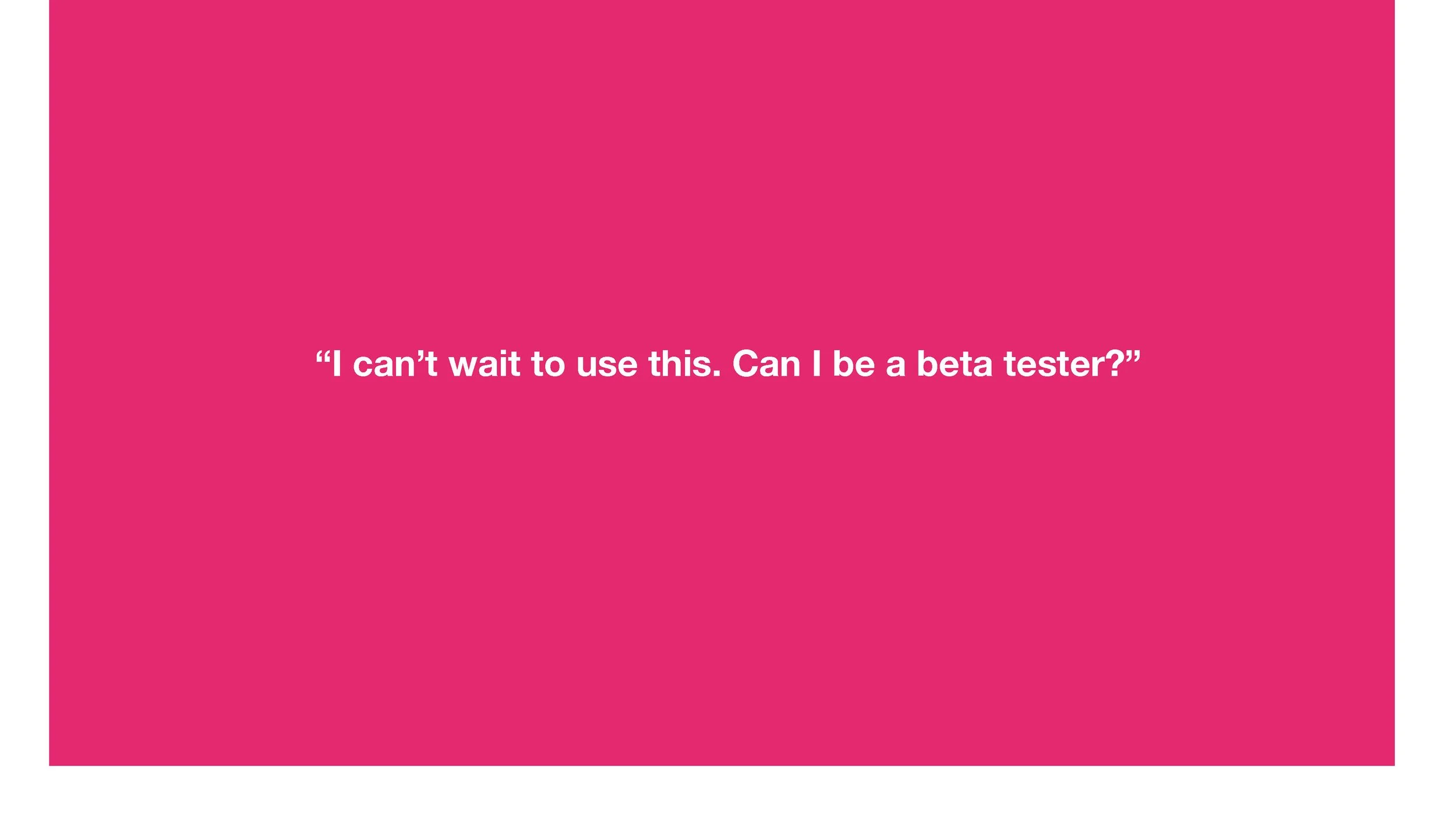
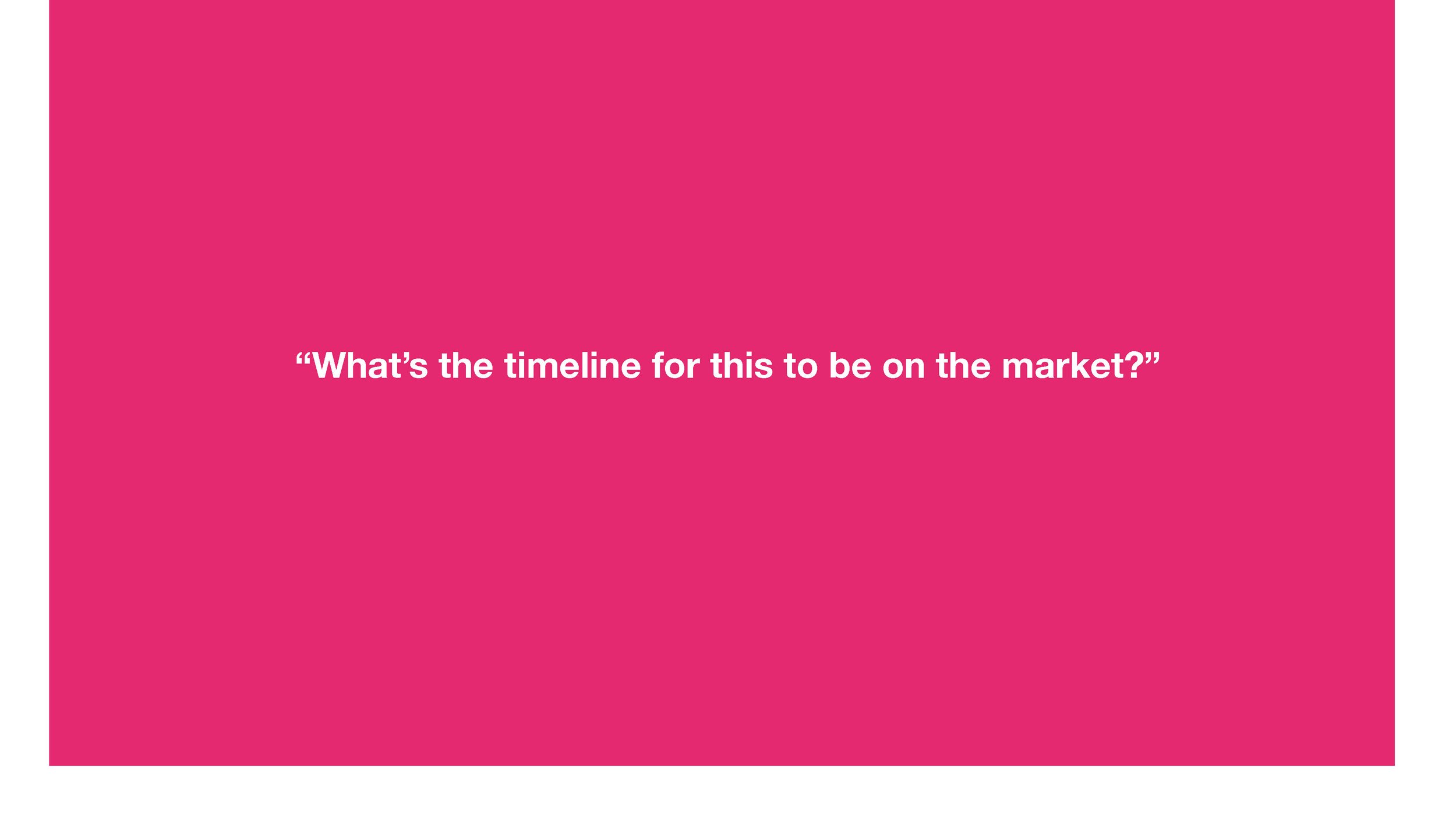
Despite being told that this was a conceptual feature, users raved about the final prototype and asked multiple times if there was any possibility that it would be on the market soon.
These are the moments that I live for, as a designer, researcher, and leader!