
Commercial Banking Application
UX Design & Research Lead · Capco Digital, embedded with client team · 2020-2021
Opening a commercial bank account isn't like opening a personal one. Beneficial ownership rules, control person designation, international transaction disclosures, identity verification across multiple people — the regulatory requirements are complex, and the companies applying range from two-person startups to entities with layered ownership structures.
The existing application reflected that complexity honestly, and not in a good way. I was embedded directly in the client's product team to redesign and streamline it from the ground up.
The Problem
We couldn’t change the regulatory landscape — but we could control how the regulations get met and support the person navigating them well. The existing application asked for the right information in a way that felt like an obstacle course, with some outdated structures that no one had taken the time to reevaluate and simplify.
Our goal then was to create a single streamlined, regulation-compliant experience that could service the US and EMEA that felt like it was built for the applicant, not the compliance team reviewing them.
The Solution
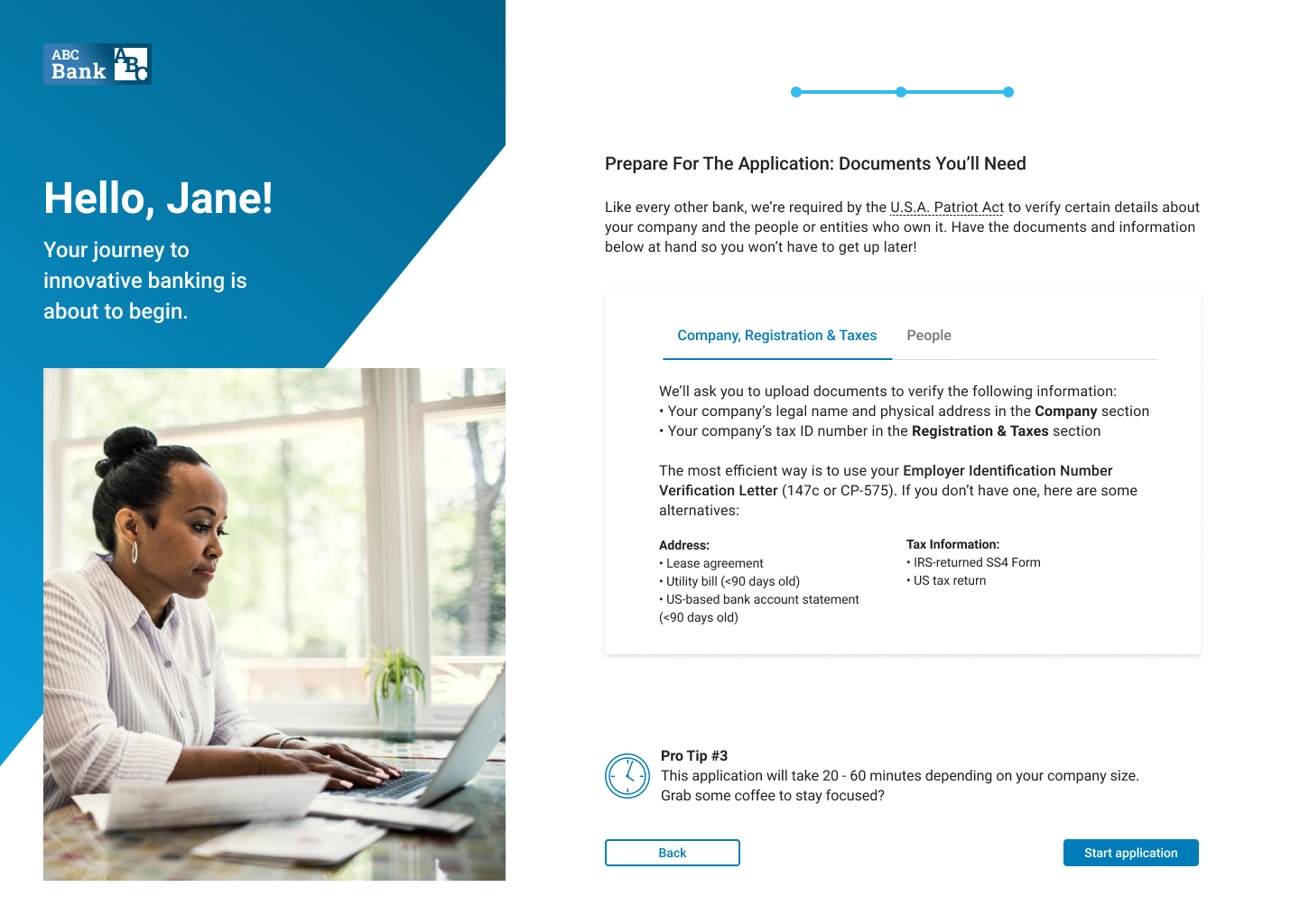
The application opens by setting expectations before asking anything — what documents you'll need, roughly how long it will take, what sections you'll move through.
The "Pro Tip" pattern and warmer tone signal early that this is going to be different from what applicants expect from a bank.
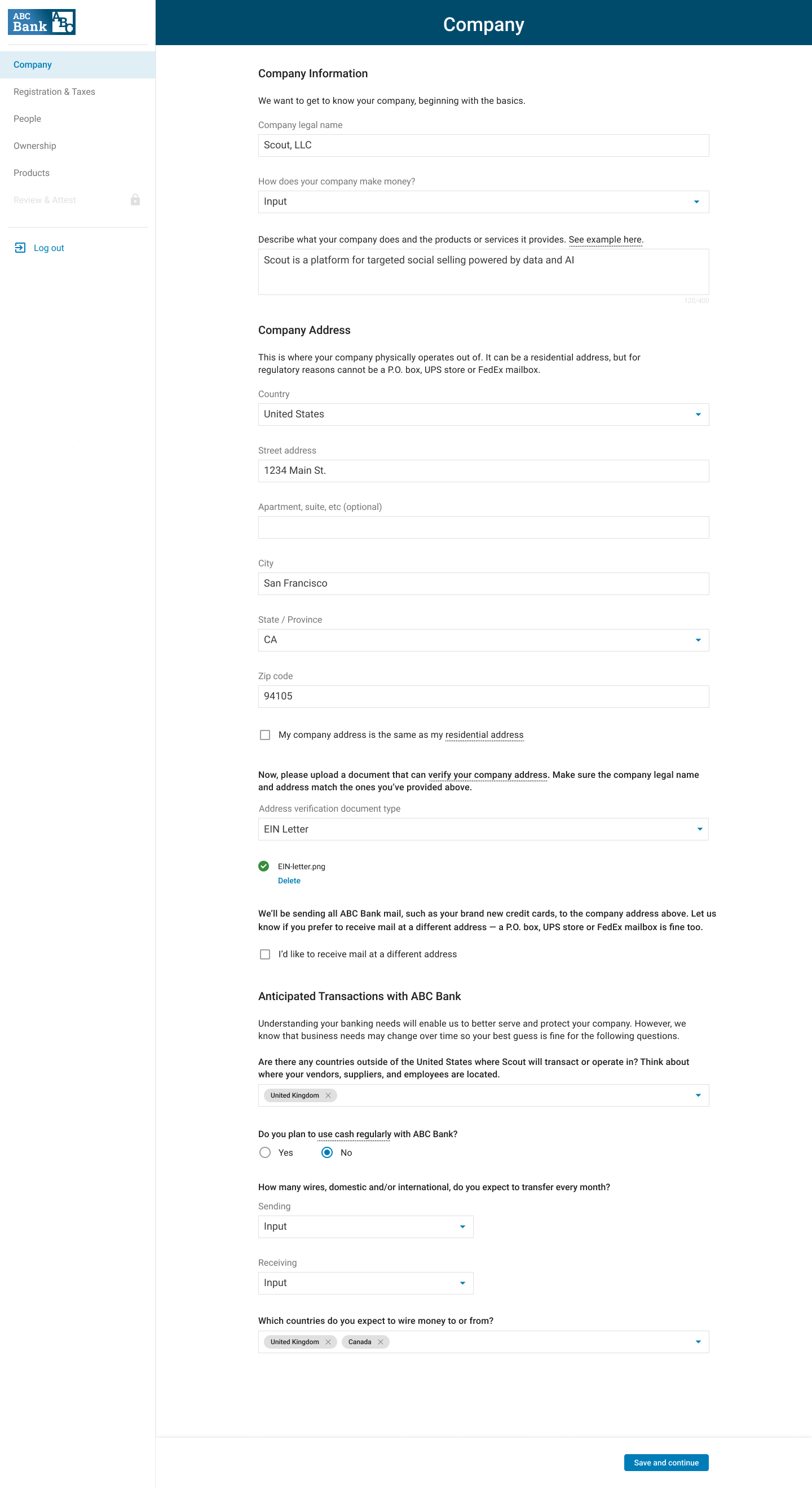
Company information flows naturally from basics into anticipated transaction patterns — international operating countries, wire volume, destination countries.
Regulatory requirements are framed as "help us serve you better." Which is also true.
Embedded contextual pop-ups to help define potentially ambiguous terms or provide examples.
And all of it is responsively US and EMEA compliant, with every decision point fully localized and harmonized.
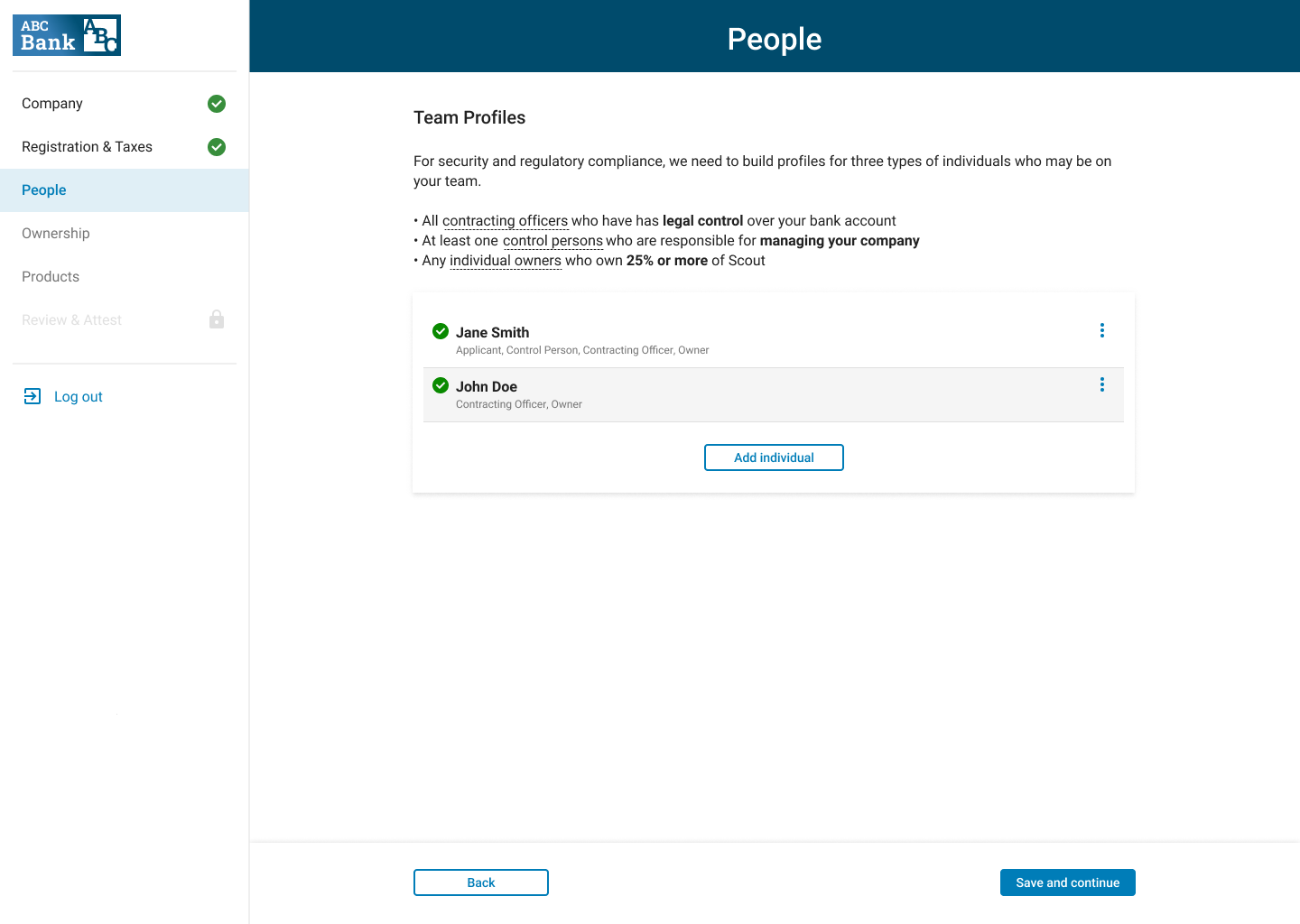
"Control person," "contracting officer," and "individual owner" mean specific things legally, and an applicant who misunderstands them creates downstream problems.
The Team Profiles overview makes the categories explicit, shows exactly who's been added and in what roles, and makes adding others simple — reducing errors and building confidence the application is being completed correctly.
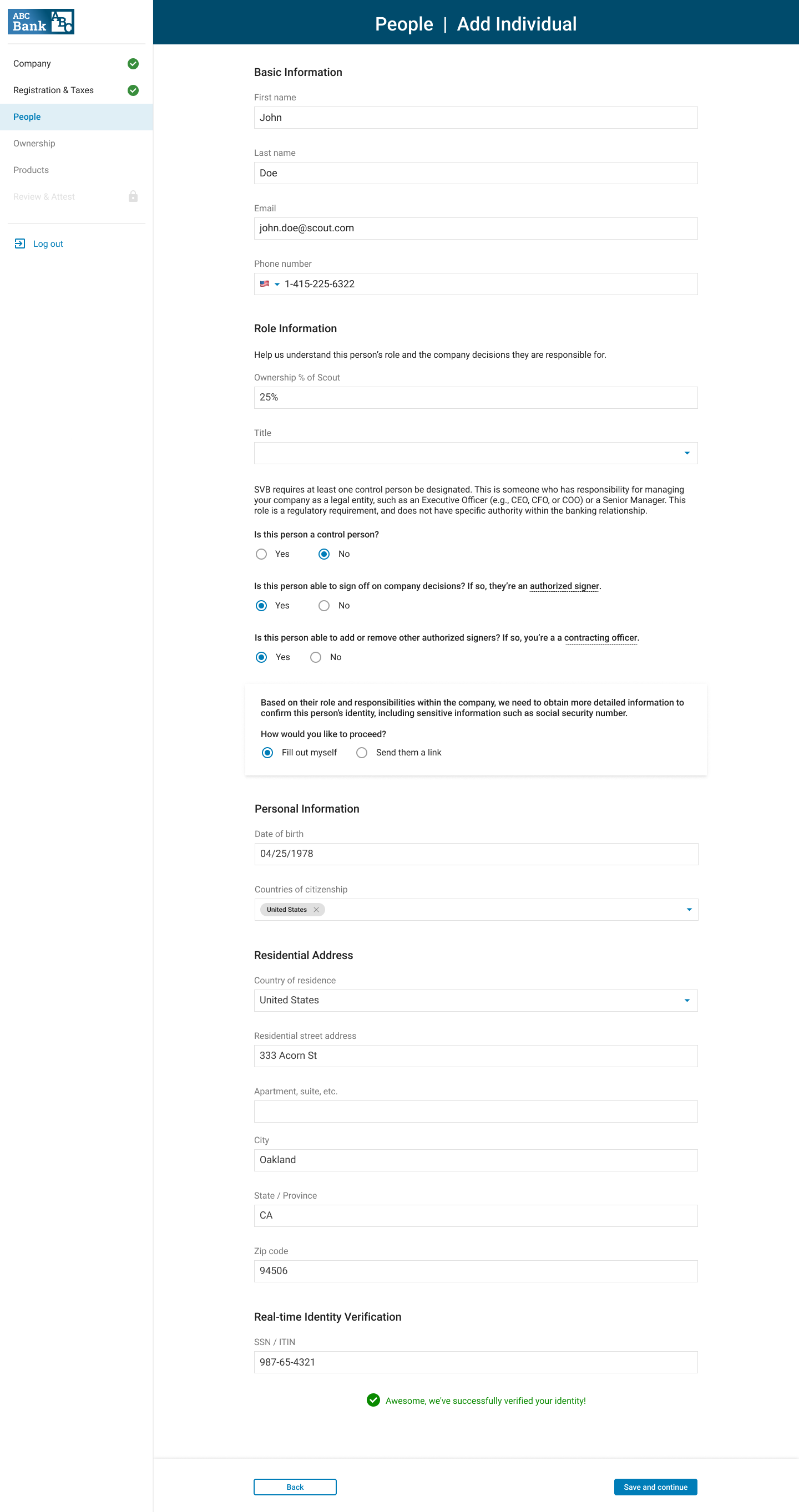
When adding another individual who needs to provide sensitive personal information, the applicant can fill it out themselves or send that person a link to complete their own section.
Small interaction, meaningful impact: it respects privacy, reduces errors from secondhand entry, and removes a real logistical burden.
Plain English questions help layperson applicants understand whether they should mark themselves with a specific role without making them parse the legal nuances.
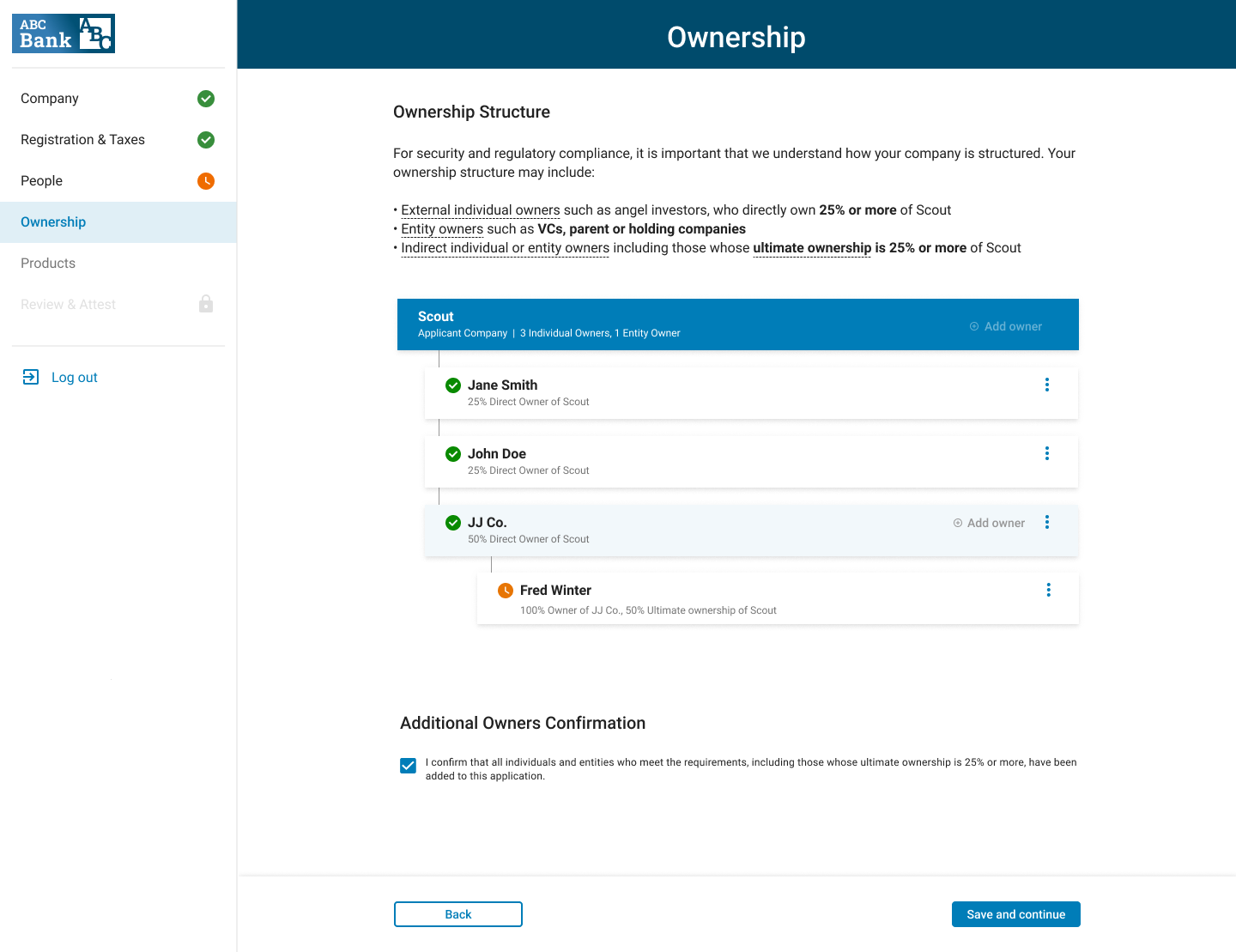
Commercial entities frequently have layered ownership structures. Previously, this section was a late-90s nightmare built the way the database was organized, not the way the person filling it out thinks about it. Multiple clicks and page reloads to add a single owner, and no full picture until you'd entered everything and backed all the way out.
The redesigned Ownership section represents this as a navigable tree. In this example, Scout's three direct owners are shown at the top level; JJ Co.'s 100% owner Fred Winter appears nested beneath it, labeled clearly as holding "50% Ultimate ownership of Scout." What had been a flat list became a legible, accurate structure.
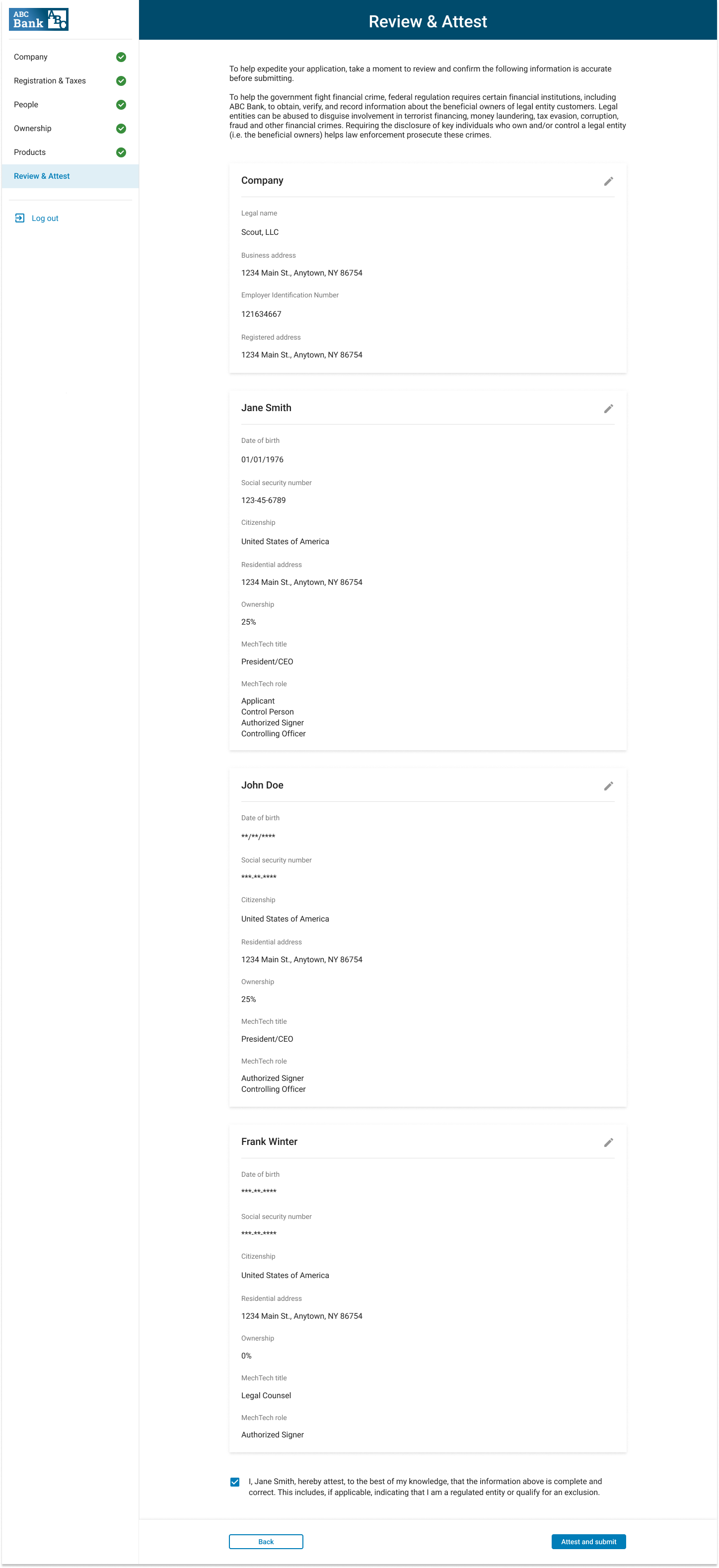
With everything confirmed, every section can be surfaced in a single scannable view, editable in place, alongside the federal beneficial ownership attestation language.
The full picture — company details, individual profiles, ownership percentages, identity verification status — visible before submission.
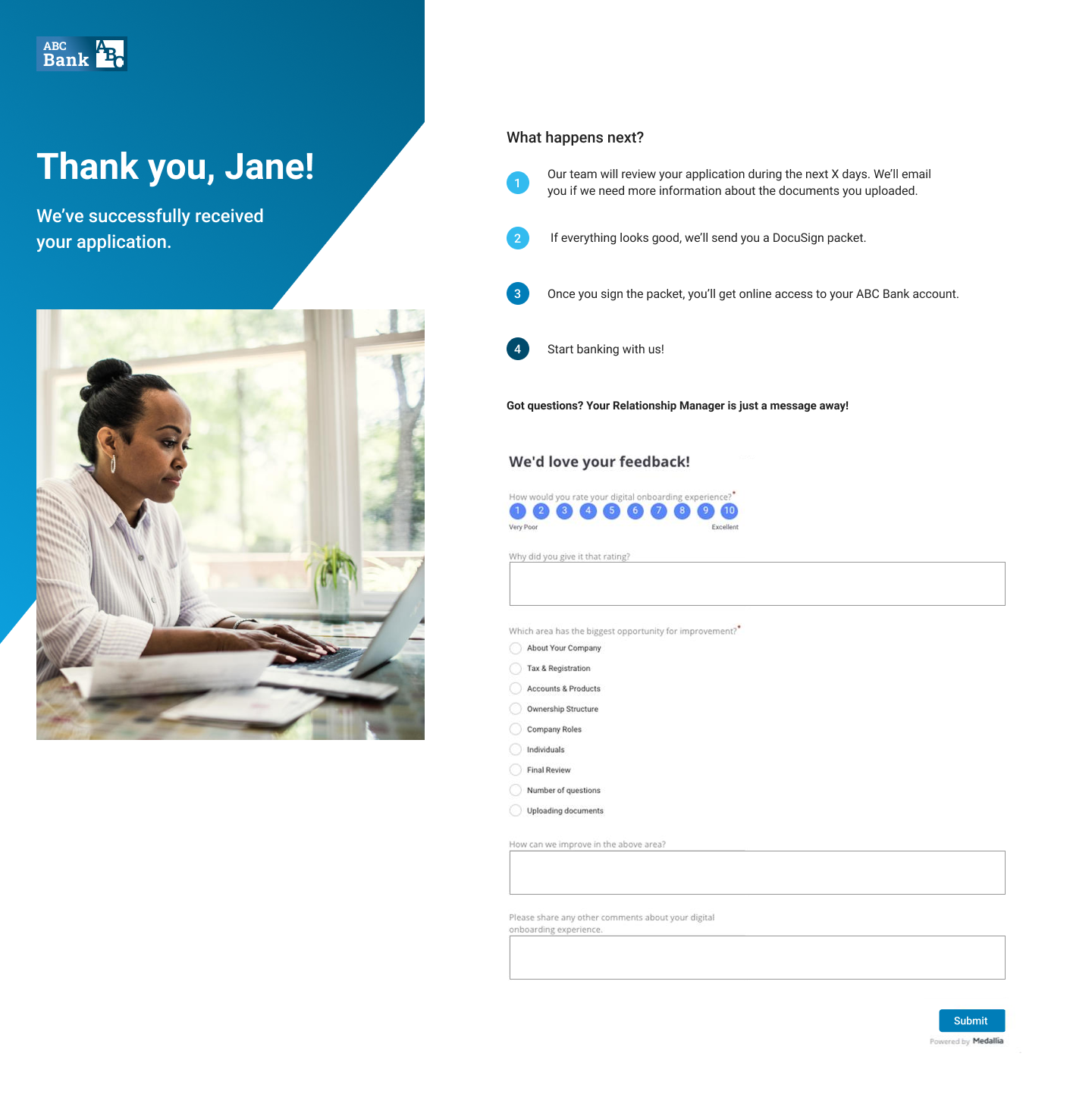
Four clear steps from review to account access, plus an integrated satisfaction survey.
Mirroring the opening structure kept things familiar and friendly.
Building measurement into the confirmation experience rather than sending a separate email meant feedback tied directly to the application while it was still fresh.
Outcomes
A development-ready redesign compliant with federal and EMEA beneficial ownership regulations and international transaction disclosure requirements.
20% fewer questions than the previous version, a new ownership structure model capable of representing direct, entity, and indirect ownership accurately, and 12 additional quality-of-life improvements across the flow.
As if that wasn’t enough, average onboarding lead time dropped from 14 days to 5 — a 60% reduction.